
A Practical Guide for Entrepreneurs and New Companies
Starting a business in the UAE involves more than simply obtaining a trade license. Proper registration, accurate classification of business activities, and ongoing compliance are essential for smooth operations, legal protection, and long-term growth.
Whether you are launching a mainland company, free zone entity, or sole proprietorship, understanding both the pre-license and post-license processes will help you avoid delays, penalties, and operational risks.
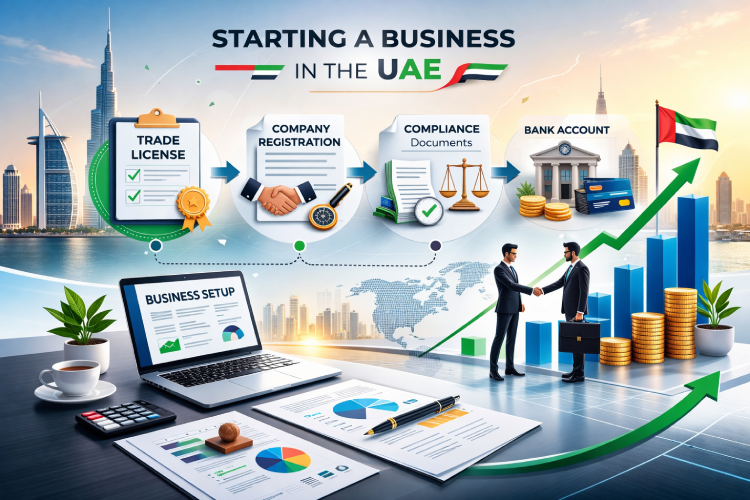
Easy Pre-License Process
In the journey of starting a business in the UAE, following a structured, step-by-step approach before obtaining your trade license makes the process smoother and more efficient.
Select the Right Business Activity
Choosing the correct business activity is the foundation of company formation in the UAE. Activities must be accurately classified under approved categories, as each activity determines:
- License type
- Regulatory approvals required
- Visa eligibility
- Operational scope
Incorrect classification can lead to delays, re-licensing, or compliance issues later.
Choose the Appropriate Legal Structure
Selecting the right legal structure impacts ownership, liability, taxation, and operational flexibility. Common structures include:
- Limited Liability Company (LLC)
- Free Zone Company
- Sole Proprietorship
Each option has different requirements related to capital, ownership rights, and regulatory oversight.
Decide on Jurisdiction: Mainland vs Free Zone
Entrepreneurs must determine where to register their business:
- Mainland: Ability to operate across the UAE market
- Free Zone: 100% foreign ownership, simplified setup, and sector-specific ecosystems
- Offshore: Suitable for international operations and asset protection
Your choice influences licensing cost, office requirements, and compliance obligations.
Reserve a Trade Name
A unique trade name aligned with UAE naming rules is required. The name must:
- Reflect the business activity
- Avoid restricted terms
- Not duplicate existing company names
Trade name approval is typically one of the first official steps in the formation process.
Prepare Required Documents
Documentation varies depending on the activity and legal structure but generally includes:
- Passport copies of shareholders
- Emirates ID (if applicable)
- Proof of address
- Shareholder and business information
- Initial approval forms
Having complete documentation speeds up approvals.
Submit Pre-Approval Applications
Certain activities (such as healthcare, education, transport, and finance) require additional approvals from regulatory authorities before the trade license is issued.
Following this pre-license process ensures a smoother path toward company formation while minimizing administrative hurdles.
Trade License Issuance in Starting a Business in the UAE
As part of Starting a business in the UAE, once all approvals and required documents are completed:
- The trade license is issued
- The company becomes legally operational
- Contracts can be signed
- Business activities can begin
However, this is only the start of the compliance journey.
Post-License Processes
After obtaining your trade license, several critical steps must be completed to ensure legal and financial compliance.
Corporate Tax Registration
Businesses must register for corporate tax within the timelines set by UAE regulations. Corporate tax applies to taxable profits and requires proper accounting records.
VAT Registration (If Applicable)
Companies exceeding the mandatory threshold must register for VAT with the Federal Tax Authority to avoid penalties and ensure lawful operations.
Opening a Business Bank Account
A corporate bank account is a cornerstone of efficient business operations. It allows you to:
- Receive Payments: Seamlessly collect funds from clients and customers.
- Pay Suppliers: Ensure timely and organized vendor payments.
- Manage Operational Expenses: Track and control daily business expenditures.
- Conduct International Transactions: Easily handle cross-border payments and foreign currency operations.
Banks require compliance checks, company documents, and business activity verification.
Accounting & Bookkeeping Setup
Maintaining accurate financial records is essential for:
- Corporate Tax Reporting – Ensures timely and accurate submission of corporate taxes.
- VAT Filing – Facilitates correct calculation and reporting of Value Added Tax.
- Audits – Supports audit requirements based on financial thresholds.
- Financial Planning – Provides a clear picture for budgeting, forecasting, and strategic decisions.
Implementing bookkeeping early helps prevent compliance risks and ensures your business stays on track financially.
Visa & Immigration Processing
After licensing, companies can apply for:
- Establishment cards
- Investor visas
- Employee visas
Visa eligibility depends on office size, activity, and jurisdiction.
Office Setup
Depending on the license type:
- Mainland companies usually require physical/Shared office space
- Free zones may offer flexi-desk or virtual office options
Office type impacts visa quotas and operational approvals.
Compliance Responsibilities for New Companies
When starting a business in the UAE, maintaining ongoing compliance is essential for sustainable operations and legal security. Businesses must stay aligned with several key requirements:
- License renewal (annual)
- Corporate tax filing
- VAT filing (if registered)
- Bookkeeping and audit readiness
- Employment compliance
- Contract and regulatory adherence
Failure to meet these obligations may result in fines, license suspension, or operational restrictions.

Common Mistakes New Businesses Should Avoid
Many startups face delays or penalties due to avoidable errors, such as:
- Choosing the wrong business activity
- Selecting an unsuitable jurisdiction
- Delaying tax registration
- Not maintaining accounting records
- Ignoring compliance deadlines
- Opening a company without a clear operational plan
Planning ahead reduces risk and improves long-term stability.
Why Proper Registration & Compliance Matter?
A structured setup and compliance strategy helps businesses:
- Operate legally from day one
- Build credibility with banks and partners
- Avoid fines and legal complications
- Scale operations smoothly
- Access investment opportunities
- Protect owners and shareholders
In the UAE’s highly regulated business environment, compliance is not optional, it is a competitive advantage.
Need Guidance for Business Registration in the UAE?
If you are planning on starting a business in the UAE or have recently obtained your trade license, professional guidance can make the entire process smoother and ensure full compliance with local regulations. Working with experienced advisors helps you choose the right business activity, complete company formation correctly, register for corporate tax and VAT, and navigate banking requirements with confidence. It also supports proper compliance and bookkeeping from the start.
Taking the right steps early when starting a business in the UAE saves time, reduces risk, and positions your company for long-term success and sustainable growth.